


What did a medieval prioress earn?
You run a house on 39 pounds a year.
About $5,600 a month in today's gold.
A month of that pay weighs about as much as 2 AA batteries in gold.
Head of a house worth thirty-nine pounds a year: seven sisters, a chaplain and a great many keys.
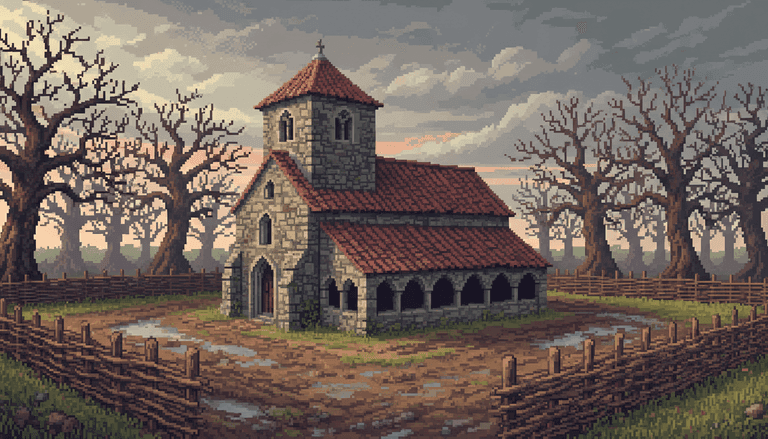
Where the money came from
Rusper Priory was a small house of Benedictine nuns in Sussex, founded before 1200, apparently by the Braose family, and probably meant for twelve nuns under a prioress. It lived less on farmland than on four parish churches it owned, at Warnham, Ifield, Selham and Horsham. In 1291 the churches were worth more than £31 a year and its lands and rents only about £13, so the churches brought in more than twice as much. Poor as it was, it drew women of good family, with surnames such as Lewknor, St John, Michelgrove and Sydney. The prioress ran it all: an inspection in 1442 found only one fault, that she gave no account of how she managed the house. Agnes Snokeshall, prioress from 1436, kept the buildings sound, and the house was owed more than it owed, though the income was slender even for five nuns. In 1535 the king's survey of church wealth put the priory's yearly value at £39. A law then handed the king every house with less than £200 a year, and Rusper had less than a fifth of that. In 1537 the old prioress, Elizabeth Sydney, and her last companion, Elizabeth Hays, who had taken their vows beside her fifty-three years before, were turned out. The prioress got a pension of 100 shillings, about an eighth of what the house brought in a year.
Sources: british-history.ac.uk · en.wikipedia.org · en.wikipedia.org 2
What a prioress's pay bought in 1350
 a day of a master mason: less than a day's pay
 a fur-lined garment: 5 days' pay
 a hand-copied book: 2 weeks' pay
 a great stained-glass window: 2 years' pay, more than a whole year of it
 a warhorse: 3 years' pay, more than a whole year of it
Every price of 1350, with its source, is on the prices page.