


What did a medieval dairymaid earn?
Paid in grain, no coins at all.
About $170 a month in today's gold.
A month of that pay weighs about as much as 10 coffee beans in gold.
Peas, rye and oats instead of wages. You eat your pay and churn the lord's butter before dawn.
Where the money came from
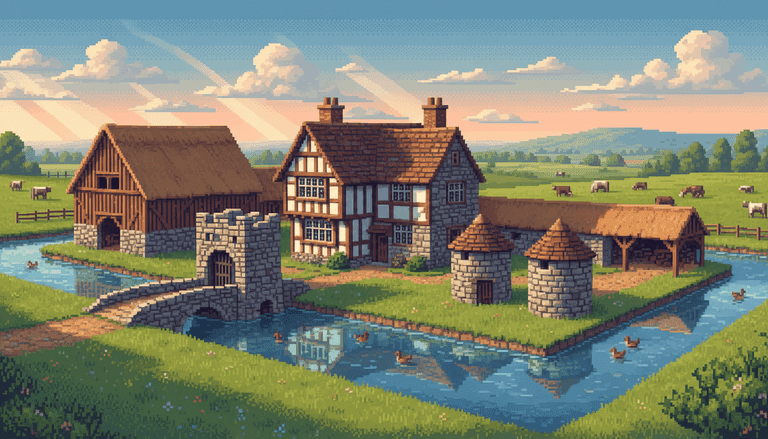
Cuxham, in Oxfordshire, belonged to an Oxford college: Walter de Merton had bought it for his new foundation, later Merton College. Few small manors in England are better recorded, above all from 1271 to 1359, when the college farmed it itself. Six to nine farm workers did most of the work on the lord's own land, and they lived as a household of their own inside the manor buildings. About 70 sheep gave wool and milk, besides the milk of a dozen cows. In 1278 and 1279 the dairymaid was paid in grain and no cash: 30 bushels of mixed grain a year, handed out every 14 weeks, with 4 bushels of wheat and 4 of barley, and no harvest meal at the lord's table. The mixed grain was probably cheap kinds, such as peas, rye and oats. Historians value it all at 13 shillings and 9 pence a year. A bare year's living then cost 15 shillings and 8 pence, so her pay fell a little short of it. Such workers had little money or freedom, but they could be sure of being fed. After the plague of 1349 they got an extra shilling to work better, and stocks were put up for those who would not. By 1353 women's yearly pay at Cuxham was back where it had been before the plague.
Sources: british-history.ac.uk · ora.ox.ac.uk
What a dairymaid's pay bought in 1350
 a farthing loaf of bread: less than a day's pay
 a gallon of ale: 2 days' pay
 a day of a master mason: 2 weeks' pay
 a cart horse: 15 months' pay, more than a whole year of it
 a hand-copied book: 16 months' pay, more than a whole year of it
Every price of 1350, with its source, is on the prices page.