


What did a medieval duke earn?
About 10,000 pounds a year.
About $2.4 million a month in today's gold.
A month of that pay weighs about as much as 2 buckets of water in gold.
Thirty castles, land in nearly every county, the richest man in England. And still not king.
Where the money came from
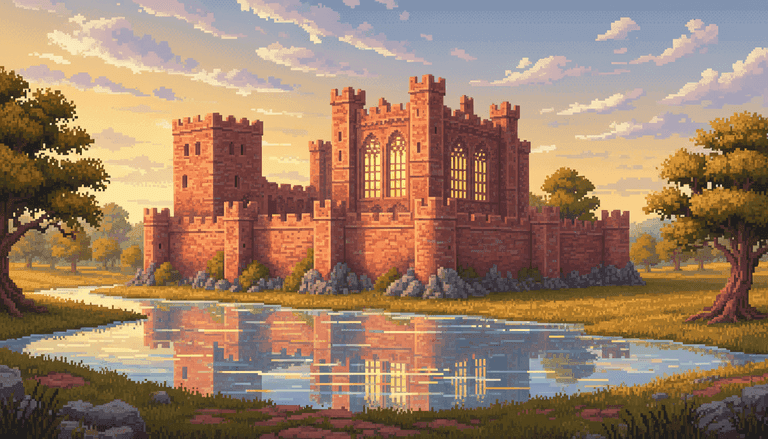
John of Gaunt was the fourth son of Edward III, and much of his fortune came through marriage. In 1359 he married Blanche of Lancaster. When her father, Henry of Grosmont, Duke of Lancaster, died in 1361, John received half his lands, and the rest came to him in 1362, when Blanche's sister died without children. Among them was the huge fortress of Kenilworth, and that year his father made him Duke of Lancaster. He came to own at least thirty castles and estates in England and France and land in almost every county in England, which brought him between £8,000 and £10,000 a year after costs. That money kept a household as large and well organised as a king's, and a wide network of retainers. Between 1372 and 1380 he rebuilt much of Kenilworth's inner court, with a new great hall and a kitchen twice the usual size. In London he kept the Savoy on the Strand, the grandest nobleman's house in the city, famous for its tapestries and jewels. In the Peasants' Revolt of 1381, rebels who blamed him for the poll tax pulled it down, smashing or burning everything and throwing the rest into the river. Under Grosmont the Lancaster lands had been worth about £8,400 a year; under John they grew until, by 1399, they were worth about £12,500, half as much again.
Sources: en.wikipedia.org · en.wikipedia.org 2 · en.wikipedia.org 3 · erenow.org
What a duke's pay bought in 1350
 a knight's full armour: less than a day's pay
 a great stained-glass window: 2 days' pay
 a warhorse: 3 days' pay
 the ransom of the King of France: 50 years' pay, more than a whole year of it
Every price of 1350, with its source, is on the prices page.